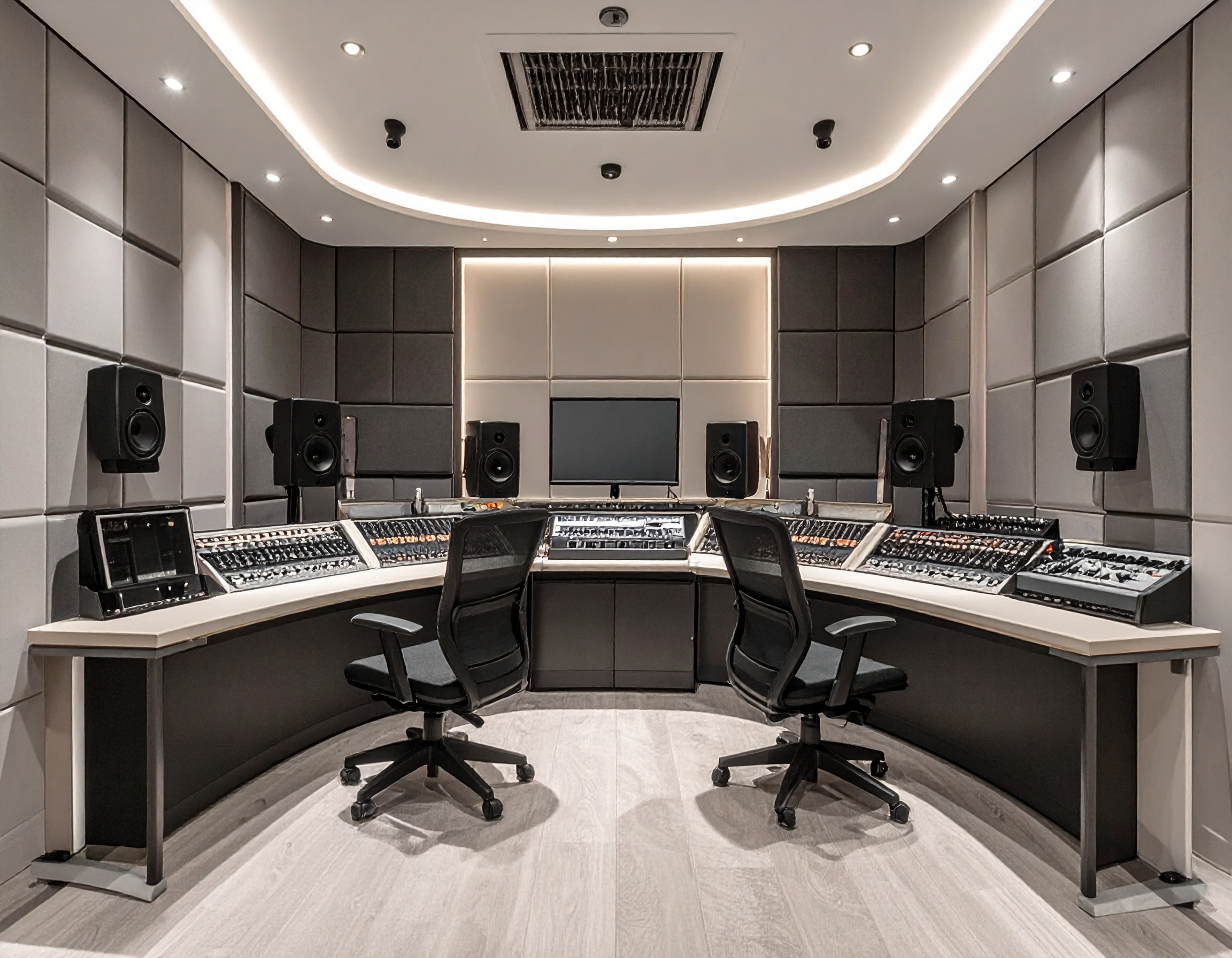
Raum & Akustik – Der physische Klangraum der Entspannung
Klang existiert nicht ohne Raum. Jeder Raum verändert Frequenzen, Nachhall und Wahrnehmung – und damit unsere emotionale Reaktion auf Musik. In der Architektur der Entspannung spielt Akustik eine zentrale Rolle.
Der Raum als Mitspieler
Der Raum als Mitspieler
Räume mit langen Nachhallzeiten erzeugen Weite und Erhabenheit – Kirchen, Kuppelsäle oder Höhlen schaffen genau jene akustische Tiefe, die Meditation fördert. Kurze Nachhallzeiten dagegen fördern Konzentration und Klarheit.
„Every environment has an aural architecture. The audible attributes of physical space have always contributed to the fabric of human culture, as demonstrated by prehistoric multimedia cave paintings, classical Greek open-air theaters, Gothic cathedrals, acoustic geography of French villages, modern music reproduction, and virtual spaces in home theaters.“ (Blesser & Salter, 2007, Spaces Speak, Are You Listening? Experiencing Aural Architecture)
Akustik und Physiologie
Klangräume können emotional und physiologisch wirken. Der Nachhall wirkt wie eine natürliche Verlängerung des Atems – ein akustisches „Einatmen und Loslassen“.
„The state of tranquility: subjective perception is shaped by contextual modulation of auditory connectivity. When room size matters: acoustic influences on emotional responses to sounds.“ (Tajadura-Jiménez et al., 2010, Emotion)
Der AUDIOSPA-Ansatz
In AUDIOSPA werden architektonische und akustische Prinzipien vereint:
• diffuse, warme Reflexionen,
• keine harten Kanten,
• ausgewogene Bassverteilung,
• lange Nachhallzeiten
„Immersive sound fields with moderate reverberation enhance parasympathetic tone and subjective tranquility.“ (Bem et al., 2025, Journal of the Acoustical Society of America)
Der Raum wird Teil der Musik – Klangwellen interagieren mit Oberflächen, Licht bewegt sich im Rhythmus der Akustik. So entsteht ein sensorischer Gleichklang, der Hörer und Umgebung verbindet.
Architektur und Wahrnehmung
Diese Erkenntnis prägt die Gestaltung von AUDIOSPA: Räume werden als atmende Organismen gedacht – nicht als Behälter für Klang, sondern als Resonanzkörper für entspannende Erfahrungen.
„Architectural acoustics shape not only auditory but also emotional perception of space. The correlation between the emotional impact of spaces and their acoustic parameters illustrated the significance of low frequencies in the emotional impact of worship spaces.“ (Algargoosh et al., 2022, Journal of Environmental Psychology)
Quellen
Blesser, B., & Salter, L.-R. (2007). Spaces Speak, Are You Listening? Experiencing Aural Architecture. MIT Press
Tajadura-Jiménez, A., Larsson, P., Väljamäe, A., et al. (2010). When room size matters: acoustic influences on emotional responses to sounds. Emotion, 10, 416–422. https://doi.org/10.1037/a0018316
Bem, M. J., Chabot, S. R. V., Brooks, V., & Braasch, J. (2025). Enhancing museum experiences: Using immersive environments to evaluate soundscape preferences. Journal of the Acoustical Society of America, 157(2), 1097–1108. https://doi.org/10.1121/10.0035832
Algargoosh, A., Soleimani, B., O’Modhrain, S., & Navvab, M. (2022). The impact of the acoustic environment on human emotion and experience: A case study of worship spaces. Journal of Environmental Psychology, 81, 102014. https://doi.org/10.1016/j.jenvp.2022.102014
Weiterführende Literatur
Koelsch S. – Good Vibrations (2022)
Levitin D. – Music as Medicine (2025)
Blesser & Salter – Spaces Speak, Are You Listening? (2017)
Pallasmaa J. – The Eyes of the Skin (2012)
Benson H. – The Relaxation Response (2019)